








After working in HR for a number of years, I’ve become wary of the phrase “employee engagement initiative.” Not because engagement doesn’t matter, but because the way organisations often approach it misses the point. Engagement is rarely something you fix with a programme. It’s the outcome of how work feels every day.
Most organisations I’ve worked with are genuinely trying. They invest in surveys, leadership training, wellbeing programmes, and new employee engagement tools. And yet engagement scores plateau. Attrition creeps up. HR teams are left explaining why all the effort hasn’t delivered the shift everyone hoped for.
In my experience, engagement doesn’t stall because people don’t care. It stalls because engagement is treated as a standalone effort, rather than as the result of culture, leadership behavior, and the employee digital experience working together. When those three drivers are intentionally designed around employees, engagement follows. When they aren’t, no initiative will save you.
 A People-First Automated Onboarding Experience
Make onboarding a meaningful experience for remote and hybrid employees. With tasks, notifications and content ideas.
Download Now.
Chapters
- Culture is the foundation, whether you design it or not
- The digital experience is the experience
- Engagement is an outcome, not a programme
- What employee engagement will look like next
- Building engagement around the employee
Culture is the foundation, whether you design it or not
Culture is where employee engagement starts, regardless of whether leaders intend it to or not. Employees experience culture through everyday signals: who is listened to, how mistakes are handled, whether leaders follow through on commitments, and whether values hold up under pressure.
From an HR leadership perspective, the biggest culture mistake I see is overestimating intent and underestimating experience. Leaders often believe the culture is inclusive, transparent, and supportive because that’s how it’s described internally. Employees judge culture by whether it feels safe to speak up, whether decisions are explained, and whether standards are applied consistently. CIPD is clear that organisations need to foster a culture where people feel psychologically safe to use their voice.
I’ve seen engagement scores sit stubbornly flat for years until organisations were willing to look honestly at the gap between stated values and lived experience. In one organisation, engagement only began to shift when leadership behavior was measured as rigorously as performance outcomes. Inclusion, flexibility, and accountability were no longer aspirational values. They became explicit expectations, reflected in leadership feedback and performance conversations. Within twelve months, engagement improved and regretted attrition declined.
Culture didn’t change because HR launched a better campaign. It changed because behavior changed. This is why employee engagement initiatives fail when they’re layered on top of misaligned culture. You cannot survey your way out of a trust problem. Engagement improves when employees see that how work gets done matters just as much as what gets delivered.
Leadership is where engagement is won or lost
If culture sets the tone, leadership determines whether it’s sustained. Employees may feel connected to an organisation’s mission, but their day-to-day experience is shaped almost entirely by their manager. Gallup’s long-running research reinforces this, showing that managers account for around 70% of the variance in team engagement. That’s not a new insight, but what has changed is what employees expect from leaders.
Today’s leaders are expected to provide clarity, context, and empathy, particularly in hybrid and fast-changing environments. Command-and-control approaches simply don’t hold up when work is complex and distributed. What I see repeatedly is that disengagement isn’t usually about ambition or workload. It’s about a lack of trust in leadership decisions and a lack of visibility into why those decisions are made.
The challenge is that many leaders don’t have a clear view of how their teams are actually experiencing work. By the time disengagement shows up in annual survey results, it’s often already embedded. This is where employee engagement tools can be genuinely useful, not as score-generators, but as early warning systems.
In one organisation, we moved away from treating engagement surveys as a once-a-year event and instead focused on continuous listening. Leaders weren’t judged on scores. They were judged on how they responded. They were expected to close the loop with their teams, explain trade-offs, and act where possible. Over time, engagement improved not because leaders were told to “care more,” but because they were given better insight and held accountable for acting on it.
This is also where many engagement efforts quietly fall apart. Culture, leadership behavior, and systems are often treated as separate responsibilities, owned by different functions, even though employees experience them as one. When those pieces aren’t aligned, engagement stalls. Sustained change doesn’t come from assigning engagement to a single role, but from leaders across HR, IT, and the business working from a shared view of how work is actually experienced.
 The HR Perception Gap: A Problem You Might Not Even Know You Have
Ivan Harding explores the disconnect between how HR leaders perceive their organization's employee experience and how employees actually feel about it. Read Now
The digital experience is the experience
Increasingly, employees don’t experience culture and leadership in the abstract. They experience them through the systems, processes, and tools that shape how work actually gets done.
One of the most underestimated drivers of engagement today is technology. For many employees, the digital workplace is the workplace. Collaboration, learning, performance conversations, and even social connection are mediated through systems. When those systems are slow, fragmented, or unreliable, frustration builds quietly and persistently.
Technology won’t fix a poor culture or weak leadership. But poor technology will absolutely undermine even the strongest intentions.
I’ve seen organisations with strong cultures and capable leaders still struggle with engagement because the employee digital experience made every day work harder than it needed to be. Employees didn’t disengage because they disliked their roles. They disengaged because simple tasks took too long, systems failed regularly, and workarounds became normalised.
This is where a clear digital employee experience strategy makes a tangible difference. It’s not about adding more tools. It’s about understanding how technology actually performs in real working conditions and whether it helps employees do their jobs well. Employee experience technology should reduce friction, not introduce it.
In one organisation, engagement scores had stalled despite positive leadership feedback and a supportive culture. Employee comments consistently pointed to outdated systems and constant technical disruption. By focusing on employee experience technology that provided visibility into digital performance and user experience, the organisation was able to address issues proactively. IT support tickets dropped, productivity improved, and engagement followed. Nothing about the culture changed. The experience of work did.
This is why the digital layer of engagement can’t sit solely with IT. It has to be part of the broader employee experience conversation. When technology undermines good leadership and positive culture, engagement suffers. When it reinforces them, engagement becomes far easier to sustain.
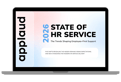 The 2026 State of HR Service Report
Five shifts redefining HRSD, based on original research. This report gives HR leaders a clear view of what’s changing — and practical steps to deliver faster, more human support. Read Now.
Engagement is an outcome, not a programme
What I’ve learned over time is that engagement initiatives fail when they operate in isolation. Culture work fails without leadership accountability. Leadership development fails when technology makes work unnecessarily difficult. Technology investments fail when they aren’t grounded in employee reality.
A people-first approach to engagement means starting with how work feels, not how it’s measured. It means asking why friction exists, not just how to raise scores. It means recognising that employee engagement tools, employee experience technology, and digital employee experience strategies are enablers, not solutions in themselves.
This is also where platforms like Applaud fit naturally into the HR ecosystem. From a leadership perspective, the value isn’t about adding another system. It’s about connecting insight, action, and follow-through across the employee experience. When HR teams can see engagement feedback, digital friction, and employee concerns in one place, it becomes far easier to act consistently and build trust.
What employee engagement will look like next
Looking ahead, the organisations that struggle most with engagement won’t be the ones short on initiatives. They’ll be the ones that fail to evolve how work is actually experienced as technology, expectations, and operating models continue to shift.
Hybrid and distributed work are no longer transitional phases. They are the reality. That fundamentally changes how culture is felt, how leadership shows up, and how supported employees feel day to day. In this environment, engagement becomes less about big moments and more about consistency. Employees judge organisations on whether expectations are clear, systems work reliably, and leaders communicate with intent rather than assumption.

AI will accelerate this shift. Used well, it can remove friction, reduce administrative burden, and surface issues earlier, allowing HR to focus on insight and action rather than process. Used poorly, it risks creating distance, opacity, and mistrust. The differentiator will not be whether organisations adopt AI, but whether they do so through a people-first lens.
This is where digital employee experience strategy becomes critical. It’s no longer enough to know whether systems technically function. HR leaders need visibility into how those systems perform for employees in real working conditions. Small points of friction compound quickly, particularly in hybrid environments where informal support is limited. Organisations that actively manage employee digital experience will be far better positioned to sustain engagement over time.
As work becomes more complex, organisations also need better coordination across culture, leadership, and technology decisions. Some formalise this through roles such as an employee experience manager, but the value isn’t ownership of engagement. It’s ensuring that decisions affecting employees aren’t made in isolation.
This is where platforms like Applaud become genuinely enabling rather than additive. By bringing together engagement insight, digital experience data, and employee feedback, HR teams can respond earlier, close the loop more consistently, and avoid the familiar cycle of collecting feedback without visible change.
Building engagement around the employee
Employee engagement is not something organisations can demand. It’s something they earn by designing experiences that respect employees’ time, energy, and contribution. When culture creates belonging, leadership builds trust, and technology removes friction, engagement becomes part of how work happens, not a separate goal to chase.
As HR leaders, our role is not to manufacture engagement, but to shape environments where it can thrive. When we build around the employee, engagement follows.
Whether it’s a new hire finding their feet or an employee navigating a complex, sensitive issue, the right Human Resources support system provides clarity, confidence, and a sense of culture — delivering a process your people are happy to engage with.
At Applaud, we help organizations do just that — bringing together intelligent self-service, people-first case management, and adaptable tools in one seamless experience that supports every success factor outlined above.
Because when every interaction feels effortless, fair, and personal, your most important customers — your employees — feel seen, supported, and ready to thrive.


About the Author 
Annabel Joseph is the Director of People at Applaud. She is a member of the Senior Leadership Team and contributes to shaping the company's direction. Her professional journey, marked by diverse sectors and international experience has led to her role in HR Technology, a true passion of hers given the relatable field. Annabel is CIPD level 7 qualified and holds a bachelor's law degree.